
What is critical thinking in nursing? Critical thinking in nursing is the ability to gather information, analyze a situation, identify a problem, and find the most appropriate solution to that problem. Following implementation of the solution, nurses must then evaluate its effectiveness.
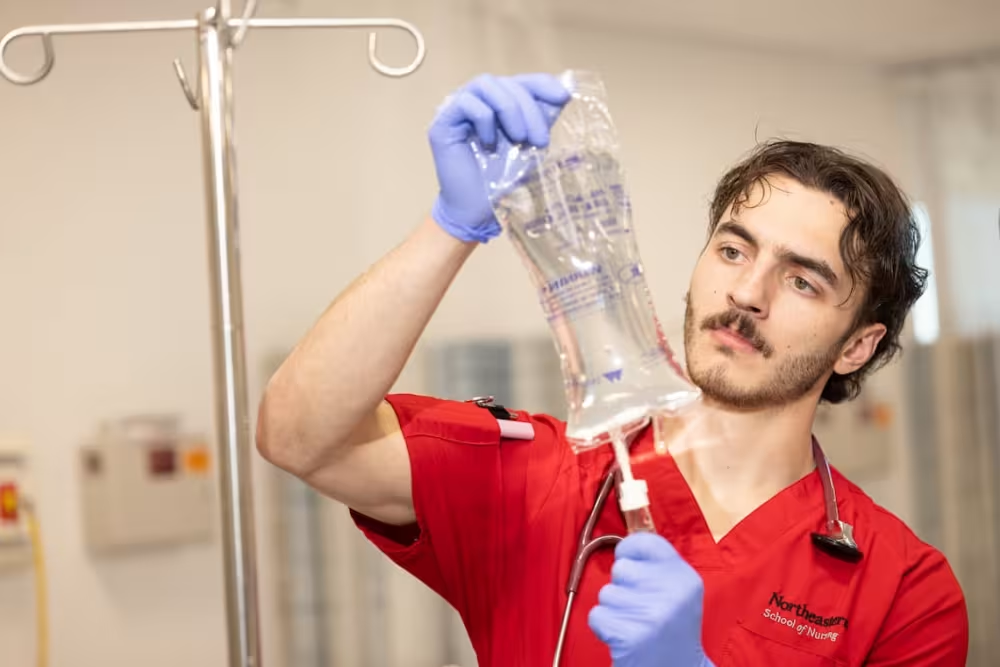
Knowledge of nursing science and evidence-based practice provides an essential foundation for patient care decisions, but nurses also need strong critical thinking skills. Critical thinking in nursing enables nurses to assess information, select appropriate interventions, and make informed patient care decisions that support better outcomes.
You can explore examples of critical thinking in nursing through Northeastern University’s Accelerated Bachelor of Science in Nursing (ABSN) program. If you have a non-nursing bachelor’s degree or at least 62 non-nursing college credits, you may be eligible to apply. After completing prerequisites, you can earn a BSN in as few as 16 months.
What skills are needed to be a nurse? Critical thinking is essential. Learn why critical thinking matters, how nurses apply it, and how nursing students can begin developing it.
What Is Critical Thinking in Nursing?
Critical thinking in nursing is the process of identifying and analyzing a problem, then determining the most appropriate action. Nurses evaluate the intervention’s effectiveness and adjust it as needed.
Applying critical thinking requires nurses to distinguish facts from opinions as they gather information. It also requires open-mindedness, recognizing their own beliefs and values while considering other viewpoints without judgment.
Elements of Critical Thinking
Critical thinking encompasses several skills, including analytical reasoning. By interpreting and evaluating information, nurses can better understand clinical issues and determine how to respond.
Other elements of critical thinking in nursing include:
- Communication: Nurses must ask questions and listen actively to gather information.
- Observation: Nurses must recognize changes in a patient’s condition as early as possible.
- Problem-solving skills: Critical thinking allows nurses to identify and analyze problems, then develop appropriate solutions.

What skills are needed to be a nurse? Explore some of the most important nursing skills.
Why Critical Thinking Is One of the Most Important Skills Needed to Be a Nurse
Critical thinking is essential in nursing because it provides a foundation for quality patient care. Nurses use it to analyze problems, identify solutions, and make informed decisions. Critical thinking also supports patient safety by helping nurses identify warning signs and address problems before they become emergencies.
The role of critical thinking in nursing extends to professional development. Through reflection, nurses can review past cases, deepen their understanding of evidence-based practice, and refine their clinical judgment. They can then apply those insights to future patient care.
How Nurses Use Critical Thinking in Daily Practice
Nurses use critical thinking throughout daily practice. For each patient, they analyze available information to identify potential causes of a problem and connect clinical findings, such as vital signs, symptoms, and lab results. Critical thinking in nursing also helps nurses reassess patients, determine whether a care plan is working, and make adjustments as needed.
Examples of Critical Thinking in Nursing
Connecting theory to practice can make clinical concepts easier to understand. Consider these examples of critical thinking in nursing:
- Recognizing early warning signs of complications, such as a fast heart rate or rapid, shallow breathing in a patient who may be going into shock
- Questioning a medication order when the drug or dosage appears incorrect
- Recognizing that a patient’s health condition may affect medication tolerance and consulting the prescribing clinician
- Reviewing new symptoms alongside a patient’s health history to identify possible causes

Discover why Northeastern’s ABSN is a top choice among nursing students.
How Pattern Recognition Strengthens Critical Thinking Skills
Pattern recognition, the ability to identify trends and irregularities by connecting relevant information, supports critical and analytical thinking. Nurses compare new findings with previously gathered information to recognize patterns. This process strengthens problem-solving by helping them identify possible causes and anticipate likely outcomes.
How ABSN Students Begin Developing Critical Thinking Skills
An ABSN program combines three main learning components: nursing theory coursework, nursing labs, and clinical rotations. Classes help you build a theoretical foundation of nursing knowledge, while labs allow you to apply that knowledge in practical situations.
In nursing simulation labs, you’ll work through clinical scenarios ranging from a severe allergic reaction to a slow-healing wound. High-fidelity medical manikins simulate patient responses, allowing you to practice clinical decision-making without putting patients at risk. Through these exercises, you’ll strengthen your critical thinking skills.
You’ll continue developing your critical thinking in nursing at nearby healthcare facilities. During clinical rotations, you’ll provide direct patient care under supervision, progressing from simple to more complex tasks. You’ll apply critical thinking as you assess patients, develop care plans, provide education, and perform treatments.

Learn Critical Nursing Skills at Northeastern University
Through Northeastern University’s ABSN program, you’ll complete a comprehensive curriculum designed to prepare you for the NCLEX-RN. The program is offered at three sites with three annual start dates. Our experienced instructors provide support as you work toward earning your BSN in as few as 16 months.
Request info today and connect with an admissions counselor to learn more.