
A cardiac nurse cares for patients who have suffered acute or chronic heart health conditions, ranging from heart attacks to coronary artery disease. Cardiology nurses can work in different settings, including ICUs and cardiac rehab programs. An aspiring cardiac RN needs a nursing degree and licensure.
Heart disease is the leading cause of death in the U.S., according to the American Heart Association (AHA). Almost 2,500 people die from cardiovascular disease each day. Furthermore, survivors of cardiac events face an uphill battle to recover.
Cardiac nurses work closely with patients with cardiovascular disease, helping them recover from heart attacks, cardiac arrest, and other acute conditions, as well as managing chronic issues like high blood pressure.
Interested in learning how to become a cardiac nurse? Your journey can start at Northeastern University. Our Accelerated Bachelor of Science in Nursing (ABSN) program allows you to graduate with a Bachelor of Science in Nursing (BSN) in as few as 16 months. It’s a faster pathway to nursing for career switchers and transfer students.
Before getting started, take a closer look at the answers to questions like, “What do cardiac nurses do?” and “What is a cardiac nurse’s salary?” Then, explore the pathway toward pursuing this exciting career.
What Do Cardiac Nurses Do?
Cardiac nurses collaborate with other providers, such as cardiac nurse practitioners and cardiologists, to care for patients with acute or chronic heart conditions. Examples of acute cardiac conditions include heart attack, cardiac arrest, and acute heart failure. Chronic heart conditions include coronary artery disease, congenital heart defects, and cardiomyopathy.
Some examples of the typical responsibilities in this nursing specialty include:
- Performing patient monitoring to assess heart activity
- Administering medications, including pain medications to control post-operative pain
- Assisting with and performing tests such as EKGs and stress tests
- Delivering patient and family caregiver education, with a focus on topics like recovering from heart surgery and following a heart-healthy lifestyle
- Helping patients navigate cardiac rehabilitation
A cardiac RN’s specific responsibilities vary depending on the area of focus and work setting. For example, cardiac RNs working in the intensive care unit (ICU) may need to use defibrillators to restore patients’ heart activity. Meanwhile, RNs in the cardiac cath lab work with patients who are undergoing or have already undergone cardiac catheterization, a minimally invasive procedure.
These nurses may alternatively work in long-term care or rehabilitative facilities. Cardiac patients may be in cardiac rehab for months as they recuperate and adapt to lifestyle changes. Compared to ICU nurses, cardiac rehab nurses may work with their patients for a much longer period.
Essential Skills and Qualities for a Cardiology Nurse
Cardiovascular care can be a challenging nursing specialty. Depending on the work setting, a cardiac nurse may need to respond quickly to emergencies and manage complex cases. Some of the important skills and qualities that can help cardiovascular nurses succeed include the following:
- Adaptability
- Attention to detail
- Communication skills
- Critical thinking
- Empathy and compassion
- Problem-solving skills
- Staying calm and thinking clearly under pressure
- Stress management and emotional resilience
- Teamwork and collaboration

Interested in exploring other nursing specialties? Discover the role of a geriatric nurse.
How to Become a Cardiac Nurse
If becoming a cardiology nurse is the right career move for you, you’ll need to follow these steps:
1. Apply to Nursing School
The first step is applying to nursing school. If you lack prior college education, you’ll need to enroll in a traditional BSN program, which typically takes four years. If you have a non-nursing bachelor’s degree or a minimum of 62 college credits, you may be eligible to apply to Northeastern’s ABSN program.
Depending on your prior education, you may also need to complete some prerequisite courses before submitting your application. You’ll need a grade of C or better in these courses. An admissions counselor at Northeastern will walk you through each step of the admission process.
2. Earn BLS and ACLS Certification
You can obtain Basic Life Support (BLS) certification from your local chapter of the American Red Cross. The Basic Life Support class walks you through the lifesaving procedures you must follow in the event someone is suffering from cardiac arrest. It teaches skills like cardiopulmonary resuscitation (CPR) and the use of an automated external defibrillator (AED).
Advanced Cardiac Life Support (ACLS) builds on the training you receive in the BLS class. You’ll learn how to stabilize critical patients who have suffered from acute events like stroke, cardiac arrest, and acute coronary syndrome.
You can earn your BLS and ACLS certifications while you’re working through the admission process. You could even wait to earn your ACLS certification until after you graduate. Some students might prefer to become certified early on.
3. Earn a BSN
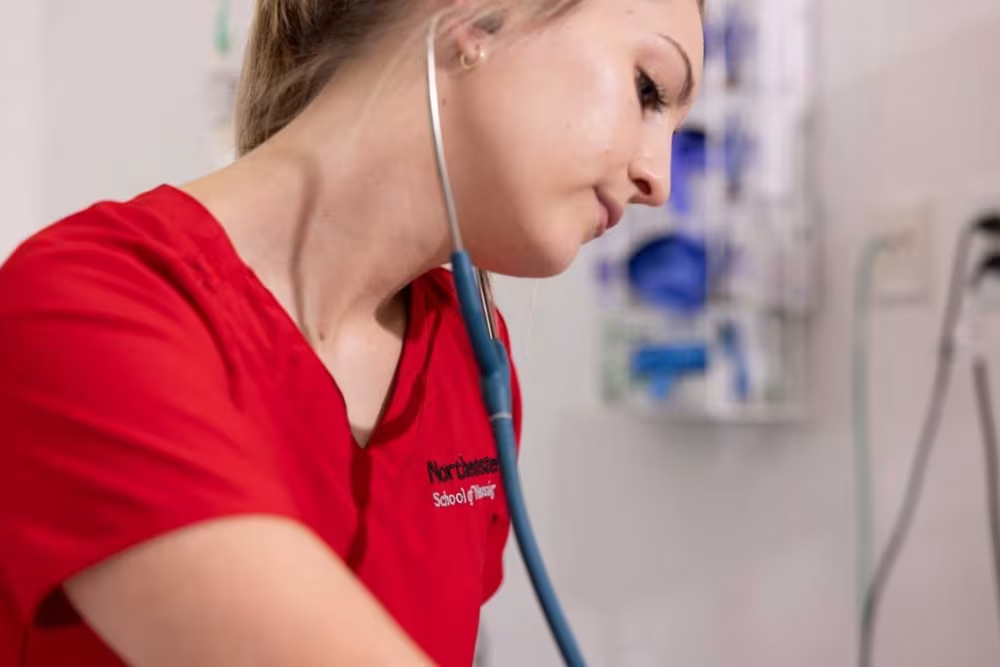
Once accepted to nursing school, you will start working on your BSN. Although programs differ, all nursing schools offer a combination of didactic coursework and hands-on, immersive learning experiences.
At Northeastern, you’ll enjoy a hybrid learning approach, with online coursework, in-person nursing labs, and clinical rotations at nearby healthcare facilities. The curriculum at Northeastern covers everything from nursing ethics and pharmaceutical interventions to nursing research, mental health promotion, and beyond.
4. Obtain an RN License
Earning a BSN qualifies you to take the NCLEX-RN. This is the national licensure exam you’ll need to pass to obtain a state-issued RN license. Plan on preparing for the NCLEX-RN well in advance while you’re still in nursing school. Consider forming an NCLEX-RN study group with other students in your cohort. It’s also a good idea to answer at least a few practice NCLEX-RN questions each day and take full-length practice exams.
5. Gain Clinical Experience
After becoming licensed, you can start looking for jobs within the cardiovascular nurse specialty. Think carefully about the setting you’re interested in, such as the cardiac cath lab, ICU, or a cardiac rehabilitation program.
During school, you could talk to your nursing instructors to gain some insights into different work settings for cardiac RNs. You’ll also have opportunities to connect with experienced RNs during clinical rotations, who may be able to offer career guidance.
6. Pursue Cardiac Certification
After gaining some clinical experience as a cardiac nurse, you can pursue optional professional certifications. While not necessarily mandatory, certification may be preferred by some employers and can open the door to new career opportunities. Some certification options within this specialty include:
- Cardiac Medicine Certification (CMC)
- Cardiac Surgery Certification (CSC)
- Cardiovascular Nursing Certification (CV-BC)

Learn more about the fastest way to earn a BSN.
Cardiac Nurse Salary and Career Outlook
It’s always smart to consider the salary expectations and job outlook of any field you’re considering transitioning into. All types of nurses enjoy strong salary command. According to the U.S. Bureau of Labor Statistics (BLS), RNs made a median annual salary of $93,600 as of May 2024. RN job growth rate is also projected to grow 5% between 2024 and 2034.
Learn to Promote Heart Health at Northeastern University
Northeastern University’s Bouvé College of Health Sciences offers the ABSN program with three start dates per year in three different locations: Charlotte, North Carolina; near Boston, Massachusetts; and near Providence, Rhode Island.
No matter where you attend, you’ll enjoy hybrid learning within a close-knit nursing cohort and receive personalized guidance from attentive instructors, thanks to our small class sizes. Contact an admissions counselor today to start working toward your new life as a nurse.