
Learning how to become a mental health nurse can be a good choice for those who want to empower patients with mental illnesses. First, earn a nursing degree, like a Bachelor of Science in Nursing, through a traditional or accelerated pathway. Next, pass the NCLEX-RN to obtain a nursing license.

To become a mental health nurse, you must earn a nursing degree, such as a Bachelor of Science in Nursing (BSN), meet your state’s registered nurse (RN) licensure requirements, and pass the NCLEX-RN before applying for mental health nursing positions. When considering how to become a mental health nurse, remember that you do not always need experience in another nursing specialty before pursuing work in mental healthcare.
If you have a non-nursing bachelor’s degree or at least 62 college credits and want to transition into nursing, consider Northeastern University’s Accelerated Bachelor of Science in Nursing program. You could earn a BSN in as few as 16 months, preparing you for the NCLEX-RN exam and to pursue a variety of nursing specialties.
To evaluate this career path, learn what mental health nurses do and explore common questions, including “How long does it take to become a psychiatric nurse?” You can also review the education, licensure requirements, and skills needed to succeed in this specialty.
What Is a Mental Health Nurse?
A mental health nurse, also known as a psychiatric mental health (PMH) nurse, is an RN who specializes in caring for patients with mental health conditions, addressing their physical and psychiatric healthcare needs.
Mental health RNs assess and care for people with conditions such as substance use disorder, depression, and post-traumatic stress disorder (PTSD). Their responsibilities may include:
- Administering medications and other treatments
- Assessing patients and handling new patient intake
- Counseling patients experiencing emotional distress
- Providing patient and family caregiver education
- Providing therapeutic support during group or individual sessions
- Stabilizing patients during psychiatric emergencies
How to Become a Mental Health Nurse: Step-by-Step
Aspiring RNs, including future mental health nurses, must first earn a qualifying nursing degree. Options include a traditional BSN program, which can be completed in four years, and an Accelerated BSN program, which can be completed in under two years. For example, Northeastern’s ABSN program can be completed in as few as 16 months.
Regardless of the pathway, nursing education combines didactic coursework with hands-on clinical learning. At Northeastern University, students complete coursework online and attend in-person nursing skills and simulation labs to develop clinical skills.
Students also participate in clinical rotations at nearby healthcare facilities, gaining experience across practice areas, including mental and behavioral health.
After earning a nursing degree, you must apply to the appropriate nursing regulatory body, receive authorization to test, pass the NCLEX-RN, and meet all other state requirements for RN licensure. Once licensed, you can apply for mental health nursing positions.
After gaining experience in mental health nursing and meeting the eligibility requirements, you may pursue professional certification. One option is the Psychiatric Mental Health Nurse – Board Certified (PMH-BC) credential from the American Nurses Credentialing Center (ANCC).

Learn why Northeastern’s ABSN is a top choice for future nurses.
How to Become a Psychiatric Mental Health Nurse Practitioner (PMHNP)
If you want to advance beyond the RN role, you can learn how to become a psychiatric mental health nurse practitioner. A PMHNP is a nurse practitioner who works as an advanced practice registered nurse (APRN). They have a broader scope of practice than RNs and, in some states, have prescriptive authority and can operate their own practices.
To become a PMHNP, you must first become an RN. Graduate program admission and experience requirements vary, and some require psychiatric mental health nursing experience. The pathway generally includes these steps:
- Earn a qualifying graduate nursing degree, such as a Master of Science in Nursing (MSN), with a PMHNP concentration.
- Earn national board certification as a PMHNP.
- Apply for APRN licensure in the state where you plan to practice.
How Long Does It Take to Become a Psychiatric Nurse?
The timeline depends largely on your starting point. For example, a traditional BSN program typically takes four years for students with little or no prior college education.
If you qualify for Northeastern’s ABSN program, you could graduate in as few as 16 months. This time to completion does not include the time needed to fulfill the prerequisite course requirements.
After graduation, the time required to take the NCLEX-RN and obtain a nursing license varies by jurisdiction and testing availability. Retaking the exam after an unsuccessful attempt will also extend the timeline.
Along these BSN pathways, becoming a psychiatric RN may take less than two years or more than four years, depending on prior college credits, prerequisite coursework, and the licensure timeline.
Where Do Mental Health Nurses Work?
Understanding how to become a mental health nurse also involves considering the specialty’s work settings. Mental health nurses work in a variety of healthcare settings, including inpatient facilities such as psychiatric hospitals, general hospitals, and acute behavioral health departments.
Outpatient settings include community mental health programs, intensive outpatient programs (IOPs), and partial hospitalization programs (PHPs). Additional work settings can include:
- Correctional facilities
- Eating disorder treatment centers
- Private psychiatric practices
- Schools
- Substance use disorder treatment centers
Some mental health nurses also provide telehealth services remotely.
Career Outlook for Mental Health Nurses
According to the U.S. Bureau of Labor Statistics (BLS), employment for RNs is projected to grow 5% from 2024 to 2034, faster than the average for all occupations. Although the BLS does not publish projections specifically for psychiatric mental health nurses, the broader RN outlook provides context for overall demand.
The prevalence of mental health conditions also illustrates the need for care. More than one in five adults in the U.S. experience mental illness each year, according to the National Alliance on Mental Illness (NAMI). Along with the one in seven youths with mental health disorders, these individuals may need access to mental healthcare.
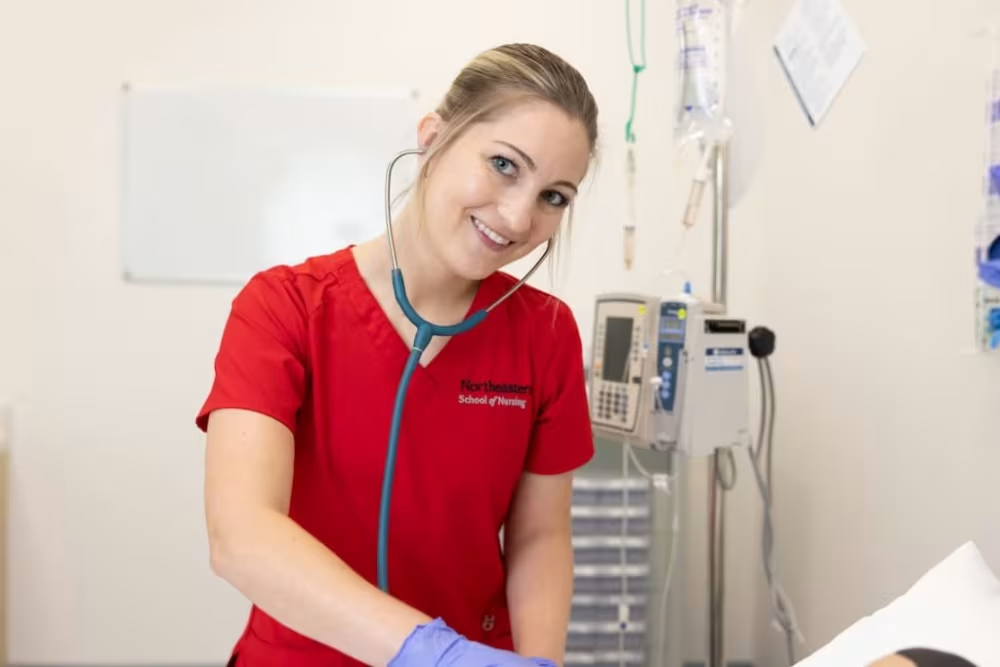
Take a closer look at the top skills nurses need to provide excellent patient care.
Skills Needed to Succeed as a Mental Health Nurse
Mental health nurses rely on clinical and interpersonal skills to provide effective care. Important clinical skills for this specialty include:
- Care planning and care coordination
- Crisis intervention and de-escalation
- Patient and family caregiver education
- Risk and safety assessment
- Psychopharmacology and medication administration
- Therapeutic communication
Psychiatric nurses also need strong interpersonal skills, including:
- Active listening
- Compassion and empathy
- Emotional intelligence
- Emotional resilience
- Patience
- Professionalism, including the ability to maintain professional boundaries
- Verbal and written communication skills
Mental health nurses must also build rapport with patients. Trust supports a productive therapeutic relationship between patients and their providers.
Is a Career in Mental Health Nursing Right for You?
Before choosing a nursing specialty, consider your academic interests, career goals, strengths, preferred patient populations, and work settings. Ask yourself:
- Are you interested in mental health counseling but prefer a nursing career path?
- Are you interested in a nursing specialty with opportunities for advancement?
- Can you handle emotionally charged situations?
- Can you maintain strong professional boundaries?
- Do you have strong de-escalation and conflict resolution skills, or are you willing to develop them?

Pursue Your Future in Nursing at Northeastern
Whether you pursue mental health nursing or another specialty, Northeastern University’s ABSN program offers an accelerated path to a BSN. You may be eligible to apply if you have a non-nursing bachelor’s degree or at least 62 non-nursing college credits.
Northeastern provides a supportive learning community focused on student success. At one of our three ABSN locations, you will learn alongside a close-knit nursing cohort and, because of small class sizes, receive personalized attention from instructors.
Request info today and connect with an admissions counselor to learn more about the ABSN program.