
Learning what to expect in nursing school can help you better prepare. You’ll complete nursing theory courses, participate in nursing skills and simulation labs, and work clinical placements at nearby healthcare facilities, where you will provide patient care under supervision.

Before taking the first steps toward becoming a nurse, it’s helpful to learn what to expect in nursing school. It will help you prepare to make the most of your nursing education, adjust to the new environment, and meet academic expectations.
At Northeastern University, applicants to our Accelerated Bachelor of Science in Nursing (ABSN) program receive individualized support from our admissions counselors. They will answer all your questions, help you learn what to expect from nursing school, and guide you through the admission process. If you have a non-nursing bachelor’s degree or college credits, you can earn a Bachelor of Science in Nursing (BSN) in as few as 16 months.
Before making the first call to an admissions counselor, familiarize yourself with how nursing school works. Learn the answers to common questions, such as “What do you learn in nursing school?” and “What are nursing school clinicals?” Then, discover the steps you can take to prepare.
Nursing School Prerequisites and Admissions Requirements
Before applying, ensure you meet the admissions requirements. Requirements vary across programs, but generally include:
- A minimum cumulative GPA
- An admissions essay
- Standardized test score
- Letters of recommendation
If you’re applying to an accelerated program, such as Northeastern’s ABSN, you’ll also need to fulfill nursing school prerequisites. Prerequisites are courses you complete before enrollment to establish the academic foundation for success in nursing school. Your admissions counselor will review your transcripts and identify which prerequisites you must complete.
The admission requirements for Northeastern’s ABSN include:
- A non-nursing bachelor’s degree or at least 62 credits from an accredited institution
- Two letters of recommendation from professional or academic references
- Goal statement regarding interest in nursing and future plans
- Competition of prerequisites with a minimum grade of C or higher
- Current resume
- Official transcripts
Discover why Northeastern University’s ABSN is a top choice for future nurses.
How Admissions Counselors Help You Prepare for Nursing School
If you’re concerned that you don’t meet the admission requirements, your admissions counselor can help you devise a plan to meet the requirements.
At Northeastern, your counselor will review your unofficial transcripts to develop a strategy to raise your GPA with prerequisite courses, if needed. They will also guide you through the remaining application requirements, such as developing a goal statement and obtaining letters of recommendation.
What to Expect From Nursing School Coursework
While every school establishes its own curriculum, you can expect coursework to lay the foundation for clinical practice. You’ll participate in classes such as:
- Health assessment
- Nursing fundamentals
- Pathophysiology
- Pharmacology
If enrolled in an accelerated program, it’s common to complete coursework online due to the accelerated timeline. At Northeastern, online coursework allows you to complete your work on a schedule that fits your needs, provided you meet all deadlines. Our interactive online learning platform lets students view presentations and demonstrations as many times as needed to master the material.
When learning how to survive the first year of nursing school, the most important thing to remember is that you aren’t doing it alone. You will have the support of your cohort and attentive instructors.
What to Expect in Nursing School Skills and Simulation Labs
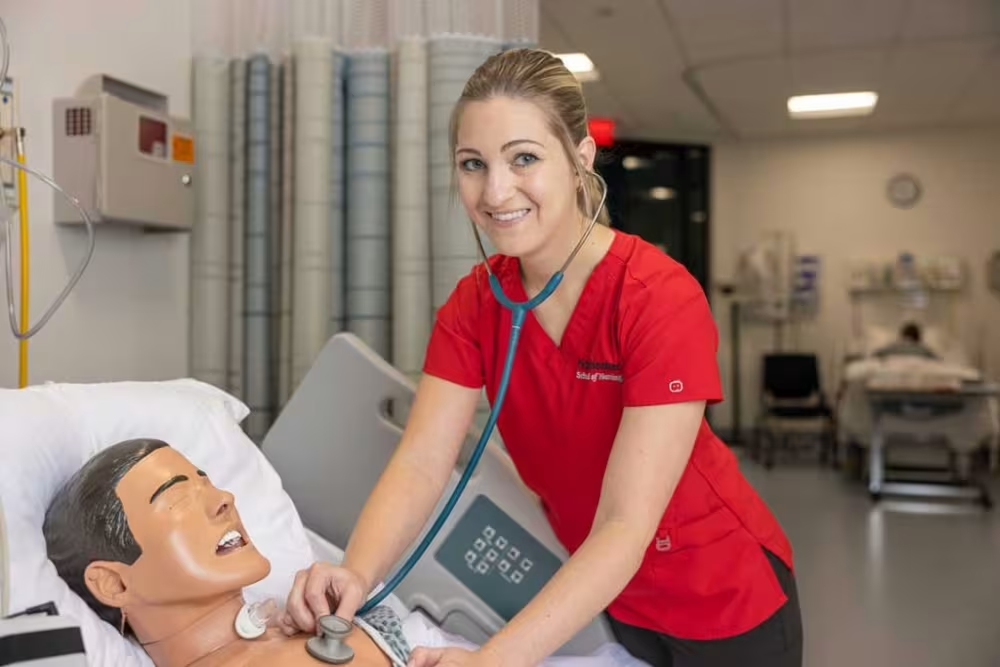
What do you learn in nursing school beyond the nursing theory coursework? You’ll apply the knowledge gained from coursework to practice in nursing skills and simulation labs. During skills labs, you’ll learn how to perform key nursing interventions, such as IV placement.
During simulation labs, you’ll learn why and when to perform various interventions on state-of-the-art medical manikins. These manikins mimic real human functions and help students learn in a risk-free environment before working with real patients.
What can you do with a nursing degree? Learn about some of the nursing specialties in demand today.

What to Expect in Nursing School Clinicals
Clinical placements, sometimes referred to as clinical rotations, are the final component of a nursing program, where students apply all they’ve learned to real-world practice. In clinical placements, students work on-site at hospitals and healthcare facilities, observing and providing patient care alongside and under the supervision of skilled registered nurses (RNs) and preceptors.
Nursing School Clinicals: Specialties You Can Explore
At first, students in clinical rotations provide basic care before moving on to more complex care. Throughout their shift, they will work directly with patients under supervision from clinical instructors.
Clinical rotations enable students to explore different nursing specialties, allowing them to see how nurses work in different environments and helping inform their career plans. At Northeastern, ABSN students complete clinicals in the following practice areas:
- Adult health
- Health management and leadership
- Mental and behavioral health
- Obstetrics and women’s health
- Pediatrics
- Public health
How to Prepare for Nursing School Before You Start
There are several steps you can take to prepare for nursing school. Learning how to survive the first year of nursing school by understanding what to expect is a good start. Additionally, you can:
- Refresh your study techniques and improve concentration.
- Become certified in cardiopulmonary resuscitation (CPR) and basic life support (BLS).
- Listen to podcasts about nursing school and the nursing profession.
- Look up introductory-level nursing tutorials from reputable sources online.
- Purchase nursing school supplies, such as a stethoscope and supportive shoes.
- Review important concepts, such as medical terminology, dosage calculations, and human anatomy and physiology.
Additionally, talk to your loved ones about how your schedule will change. Ask them to help you with your other responsibilities, which may include errands, meal prep, childcare and elder care.
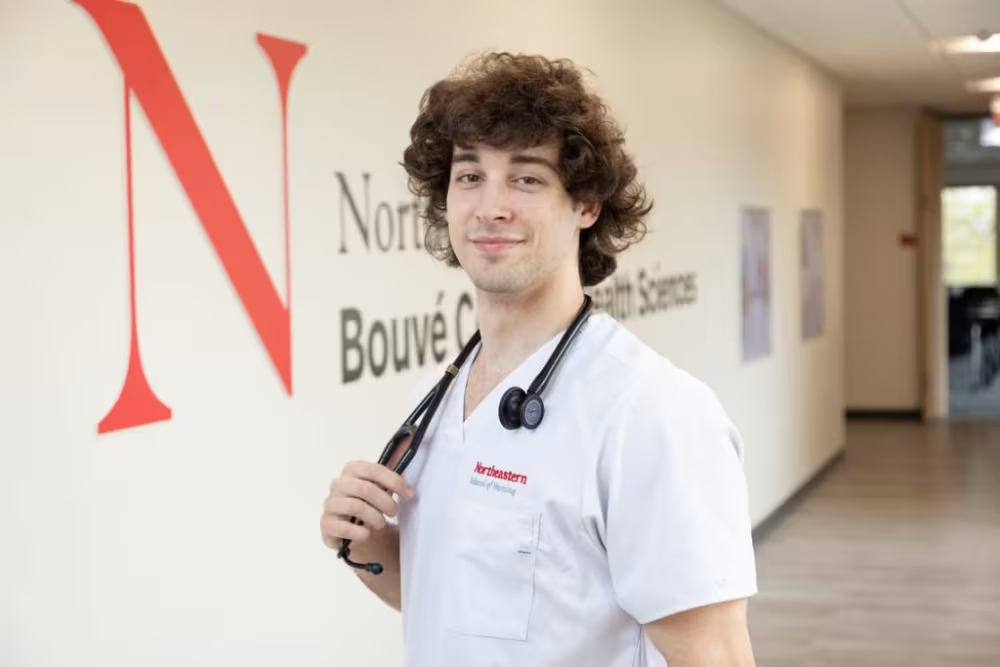
Start Your Nursing School Journey Today with Northeastern
With three start dates per year across three ABSN locations, you can start nursing school with Northeastern University sooner than you may think. With small class sizes and attentive faculty members, you will be supported throughout your education, so you can feel confident when you take the NCLEX-RN.
If you have a non-nursing degree or at least 62 non-nursing college credits, you may be eligible to apply to our ABSN program near Boston, Massachusetts, Providence, Rhode Island, or in Charlotte, North Carolina. Request information and connect with an admissions counselor to learn more.